Search Results for electrical safety

MDEE Author
Apr 13, 2026
Test and Tag: What It Is, Why It Matters, and How to Stay Compliant in South Africa
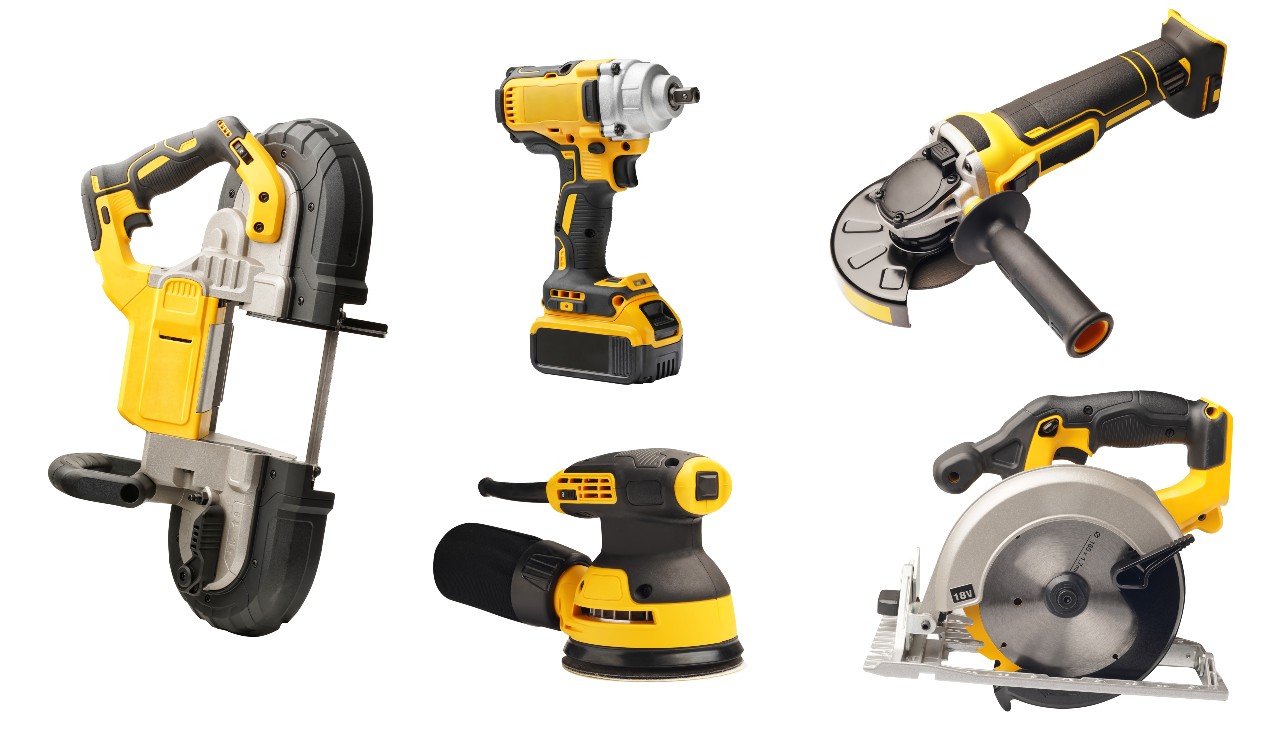
Every business in South Africa that uses portable electrical equipment — and that means virtually every business — has a legal obligation to ensure that equipment is safe to use. Test and Tag is the process by which a registered electrician visually inspects, electrically tests, and labels each piece of portable electrical equipment (PEE) to confirm that it is safe. If it is not, it is removed from service. MDEE Electrical provides Test and Tag services to businesses across Gauteng, from small offices with a handful of computers and extension cords to large factories with hundreds of portable tools and appliances. Here is everything you need to know. What Is Portable Electrical Equipment? Portable electrical equipment is any electrical appliance or tool that is connected to the mains supply via a plug and is designed to be moved or is capable of being moved. This includes: power tools (drills, grinders, circular saws), extension cords and multi-plugs, desktop computers and monitors, kettles, microwaves, and refrigerators in office kitchens, portable space heaters, test equipment, battery chargers, and floor cleaning machines. It does not include permanently wired equipment like distribution boards, fixed lighting fittings, or hardwired industrial machinery — these fall under a different inspection regime. The Legal Framework The Occupational Health and Safety Act 85 of 1993 and the Electrical Machinery Regulations require employers to ensure that all electrical equipment used in the workplace is in a safe condition. The SANS 10142-1 standard and OEM guidelines provide the framework for what constitutes a safe condition for portable equipment. While South Africa does not have a single statute that specifies precise test intervals in the way that some other countries do, the general duty of care under OHSA means that employers who do not carry out regular inspection and testing of PEE are exposed to significant liability if an incident occurs. What Does the Test and Tag Process Involve? Visual Inspection Before any electrical testing, a thorough visual inspection is carried out. This checks for damage to the power cord (cuts, abrasions, kinking, pinching), condition of the plug (cracked housing, loose pins, burnt contacts), condition of the equipment housing (cracks, missing screws, evidence of overheating), and correct strain relief at the plug and appliance end. Electrical Testing Using a PAT (Portable Appliance Tester), the technician performs earth continuity testing (confirming that exposed metal parts are correctly connected to earth), insulation resistance testing (confirming that live parts are properly insulated and not leaking current to earth), and in some cases operational tests under load. Equipment that passes is tagged with a durable label showing the test date, next test date, and the testing technician’s details. Fail and Remove Equipment that fails either the visual or electrical tests is tagged with a red FAILED tag and removed from service immediately. The business is notified of the failure and the reason, and the equipment must either be repaired and retested by a competent person or discarded. How Often Should Test and Tag Be Carried Out? The testing interval depends on the type of equipment and the environment in which it is used. In a construction site or workshop where tools are subject to heavy use and physical abuse, three-monthly testing of power tools is appropriate. In a standard office environment, annual or biannual testing of fixed-position equipment such as computers and desk fans may be sufficient. A risk-based approach, documented in the company’s electrical safety management plan, is the recommended method. MDEE Electrical offers professional Test and Tag services for businesses of all sizes. Call +27 76 440 0883 to schedule your inspection.
Electrical Safety
MDEE Author
Mar 13, 2026
Commercial Electrical Fit-Outs: What Business Owners Need to Know Before Starting a Renovation
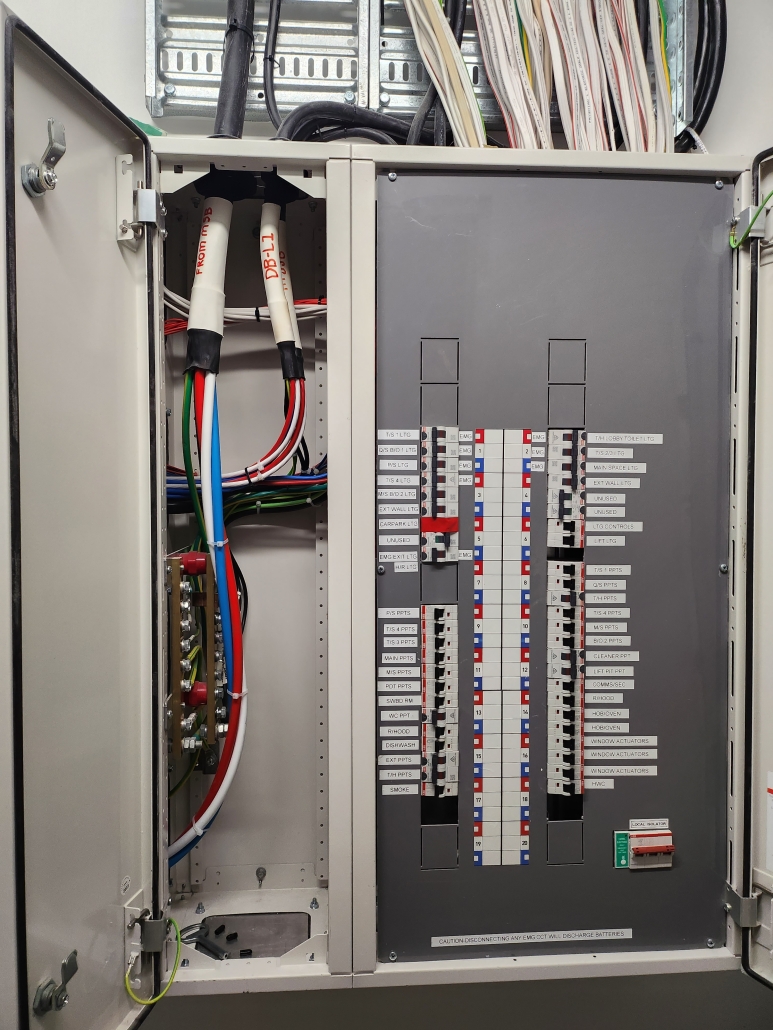
Opening a new shop, restaurant, salon, or office is one of the most expensive and complex projects a business owner will ever undertake. Between lease negotiations, construction timelines, staff hiring, and stock procurement, the electrical fit-out is often left to the last minute or handed to the cheapest quote without much scrutiny. This is a mistake that costs thousands — sometimes tens of thousands — to fix later. MDEE Electrical has completed commercial electrical fit-outs for retail stores, professional offices, salons, and food service businesses across Gauteng. This guide is written to help business owners understand what they are actually buying when they commission a commercial electrical fit-out, and how to avoid the most expensive mistakes. The Unique Demands of a Commercial Electrical Installation A commercial installation is fundamentally different from a residential one in almost every respect. The load demands are higher, the consequences of a fault or outage are more severe (lost trading hours, stock spoilage, reputational damage), the regulatory requirements are stricter, and the installation must be designed with future flexibility in mind — because commercial tenants change layouts, add equipment, and expand more often than homeowners. Designing for the Right Electrical Load Every commercial electrical fit-out should begin with a load calculation. This is a systematic process of adding up the maximum electrical demand of every piece of equipment that will be used simultaneously — display lighting, air conditioning, refrigeration, kitchen equipment, point-of-sale systems, charging stations, security systems — and sizing the incoming supply, distribution board, wiring, and protection devices accordingly. Underpowering a commercial installation is one of the most common and costly errors we see. A salon that did not account for the simultaneous operation of twelve salon chairs with dryers, ten UV nail lamps, and four washing stations will spend its first year tripping breakers and calling electricians. Getting the load right at design stage costs nothing extra. Correcting it post-installation can run to R30 000 or more. Lighting Systems That Work Hard and Look Good Commercial lighting has two jobs: it must make the space look attractive and it must do so as efficiently as possible. LED technology has transformed commercial lighting economics over the past decade. A properly designed LED lighting scheme for a 200 square metre retail store will typically consume 60 to 70 percent less electricity than equivalent fluorescent or halogen fittings, with lamp lifespans of 25 000 to 50 000 hours meaning far less maintenance. MDEE Electrical designs and installs commercial lighting systems that balance luminous efficacy (lumens per watt), colour rendering index (how accurately colours appear under the light — critical in clothing retail and food service), colour temperature (warm, neutral, or cool white depending on brand and product), and dimmability where a flexible atmosphere is required. Data and Power Infrastructure for Modern Offices Modern office fit-outs require careful coordination between the electrical installation and the structured cabling (data and voice network) installation. Underfloor ducting, cable trays, and conduit routes need to be agreed and installed at the same stage — not after the ceiling has been boarded and the flooring laid. Power outlets, USB charging ports, and data points need to be positioned to serve workstations, meeting rooms, and common areas without unsightly surface-run cables. Security Systems as Part of the Fit-Out MDEE Electrical installs security systems as an integrated element of commercial fit-outs, rather than as an afterthought. CCTV cameras, access control systems, alarm panels, and electric fence energisers all require dedicated circuits, correct cable sizing, and proper earthing to function reliably. Having these systems designed into the electrical plan from the start is significantly less expensive than retrofitting them into a completed building. The Certificate of Compliance Requirement Commercial properties require a Certificate of Compliance for the electrical installation, just like residential properties. However, the inspection and testing regime is more rigorous, and some commercial premises — particularly food service and health-care facilities — require additional sign-offs from the local authority or municipality. MDEE Electrical handles all compliance documentation as a standard part of every commercial fit-out. Our advice to every business owner: Budget your electrical fit-out properly. The electrical installation in a commercial space typically represents 8 to 15 percent of total fit-out cost. Trying to cut this below 6 percent almost always results in a substandard installation that will cost more in maintenance, faults, and eventual corrections than the original saving. Planning a commercial fit-out? Contact MDEE Electrical at +27 76 440 0883 for a free consultation and detailed scope of work.
Electrical Safety
MDEE Author
Mar 05, 2026
Is Your Distribution Board a Hidden Fire Hazard? Here’s What Every South African Homeowner Must Know
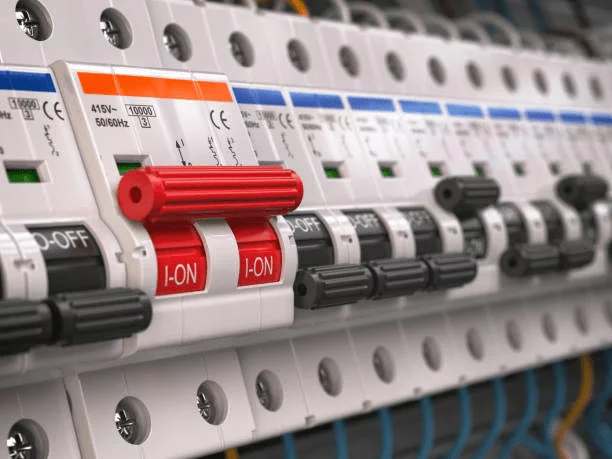
Most South African homeowners open their distribution board (DB) exactly once: when a circuit trips and the lights go out. For a few seconds the door swings open, someone flips the breaker, and the board is forgotten again — sometimes for years. But that little grey box on your wall is silently managing every amp of electricity that flows through your home, 24 hours a day, 365 days a year. When it fails to do its job, the consequences range from a tripped breaker all the way to a house fire. At MDEE Electrical & Renovations, our teams have inspected hundreds of homes across Gauteng, and we see the same dangerous patterns repeated over and over. This guide is written to help you understand what your DB actually does, the warning signs that yours is failing, and exactly what a professional upgrade involves. What Does a DB Actually Do? Your DB receives the main electricity supply entering your property and splits it into separate circuits — one for lights, one for plug points, one for the geyser, one for the garage, and so on. Each circuit is protected by a miniature circuit breaker (MCB) or, in older homes, a fuse. If a fault occurs — a short circuit, an overload, or an earth leakage — that protection device is supposed to cut power to that circuit before the wiring can overheat. A modern DB also contains a residual current device (RCD), sometimes called an earth leakage relay. This device detects when electricity is escaping to earth — for example, through a person who has received a shock — and trips the entire board within 30 milliseconds. This is the device that saves lives. Why Older Boards Are Genuinely Dangerous Problem 1: Rewireable Fuses Instead of MCBs In homes built before the 1990s, you will often find fuses rather than breakers. When a fuse blows, someone has to replace it — and here is where the danger begins. A 15-amp fuse replaced with a 20-amp or 30-amp fuse (because the 15-amp keeps blowing) means the wiring in your walls is now completely unprotected. It can carry dangerously high current, heat up, char the insulation, and eventually ignite the timber framing in your walls, often starting a fire inside the cavity where nobody can see or smell it until it is too late. Problem 2: No Earth Leakage Protection SANS 10142-1 — the South African standard for electrical installations — requires earth leakage protection in all domestic installations. Older homes frequently have none. Without an RCD, an appliance that develops a fault to its casing can deliver a lethal shock the moment someone touches it, and nothing will trip until the fault is severe enough to blow a fuse. Problem 3: Undersized Boards for Modern Loads Homes built in the 1970s and 1980s were designed for a fraction of today’s electrical load. Back then a typical home had lights, a stove, a fridge, and a TV. Today the same home might have an inverter, multiple air conditioners, underfloor heating, a fast-charge EV port, a heat pump water heater, two or three large televisions, a full home office, and multiple gaming consoles — all running simultaneously. An old 8-way board simply cannot accommodate all of this safely. Problem 4: Load Shedding Damage Every time the power cuts and returns, there is a voltage transient on the supply. Over years of load shedding these spikes degrade the internal components of older boards, weaken surge protection devices (if they even exist), and stress cable insulation. Boards that were marginal before load shedding became routine are now operating in genuinely compromised condition. Our experience: In a recent inspection in Midrand, we found a 1986-vintage board with a 60-amp main fuse that had been rewired at some point with a piece of stiff copper wire. It had been carrying the full load of a modern four-bedroom home — including an inverter — for at least five years. The fuse wire was discoloured brown from sustained heat. Six Warning Signs Your DB Needs Attention Right Now • Breakers that trip repeatedly on the same circuit without an obvious overload. • A burning smell near the board, even faint or intermittent. • A DB that feels warm to the touch on the outside. • Visible discoloration, scorch marks, or melted plastic inside the board. • Lights that flicker across the entire house rather than on one circuit. • A board that still uses wire fuses instead of circuit breakers. What a Professional DB Upgrade Includes When MDEE Electrical upgrades a distribution board, we do not simply swap the box. We conduct a full inspection of the incoming supply, check cable sizing to every circuit, test earth continuity, verify that the neutral and earth bars are correctly separated, fit a correctly rated main isolator, install dual RCD protection where required, and label every circuit clearly. The job ends with a Certificate of Compliance (CoC) — a legal document that confirms the installation meets SANS 10142-1 and that your insurer will require in the event of a claim. Call MDEE Electrical today on +27 76 440 0883 for a free DB inspection. We serve Gauteng and surrounding areas.
Electrical Safety
MDEE Author
Nov 24, 2025
Overloaded Power Strips: The Hidden Danger Lurking in Your Home & Office
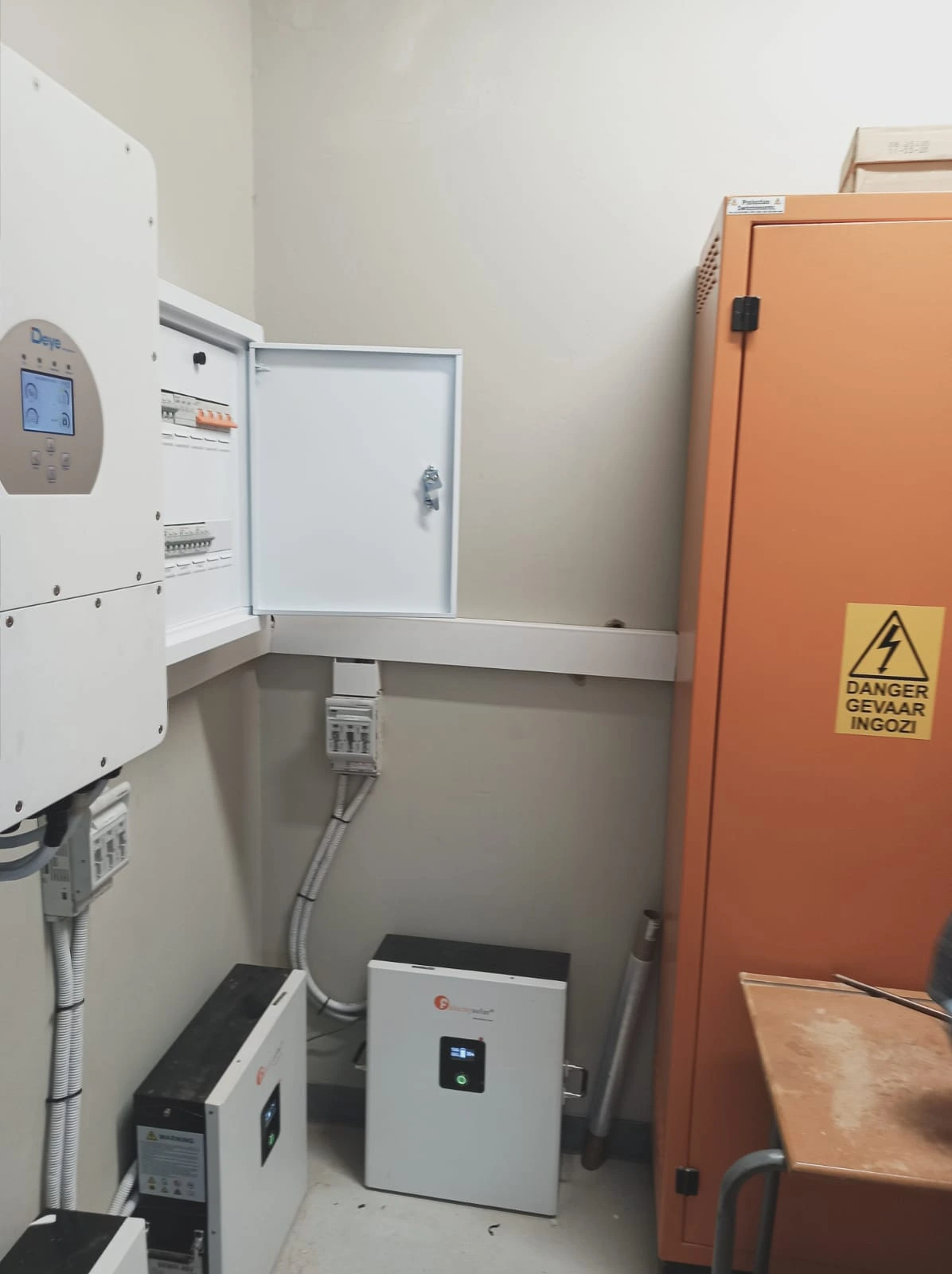
We’ve all done it — you run out of plug points, grab another power strip, plug it into the first one, and suddenly your TV, decoder, laptop charger, phone chargers, and a heater are all happily running off one lonely wall socket. It’s convenient… until it isn’t. In South Africa, overloaded and daisy-chained power strips are one of the TOP causes of electrical fires in homes and small businesses. According to the FPASA (Fire Protection Association of Southern Africa), thousands of fires every year are linked to overloaded circuits and cheap multi-plugs. Let’s break down exactly why this innocent-looking setup is a ticking time bomb — and what you should do instead. Why Daisy-Chaining Power Strips is Extremely Dangerous Massive Fire Risk Every power strip or extension cord has a maximum amperage rating (usually 10–16 A in South Africa). When you plug one power strip into another, you’re forcing a single wall socket to carry the load of 10, 15 or even 20 devices. The cables overheat, insulation melts, and sparks fly — literally. Exceeds Safe Circuit Limits Most household circuits in South Africa are rated for 15–20 A total. Plugging high-draw appliances (heaters, kettles, air fryers, microwaves) into daisy-chained strips can easily push you past 30–40 A on a single circuit. Your circuit breaker might not trip in time, and the wires inside your walls start cooking. Damages Expensive Electronics Cheap power strips rarely have proper surge protection or joule ratings. Voltage spikes and brown-outs (common during load-shedding) can fry your laptop, gaming console, or smart TV in seconds. Can Void Your Insurance Many South African insurers now specifically exclude claims caused by “improper use of extension leads” or daisy-chaining. If an assessor finds a melted multi-plug that started the fire, your claim could be rejected. Real-Life Examples We’ve Seen in Gauteng A Midrand family lost their lounge to a fire started by a R79 power strip from a discount store — three strips were chained together to run a TV, soundbar, PlayStation, and two space heaters. A small Sandton office had R180 000 worth of computer equipment destroyed because someone chained power strips under a desk to save the cost of one extra wall socket. Both could have been prevented with a R1 500–R3 000 professional installation of additional plug points. Safe & Smart Alternatives (That Won’t Burn Your House Down) Invest in Quality Surge-Protected Power Strips Look for brands with at least 1000–2000 joules of protection and individual on/off switches. Never exceed the printed wattage/amperage rating. Install Additional Wall Outlets The safest and cleanest solution. MDEE Electrical can add double or quadruple plug points in under an hour in most cases — fully SANS 10142-1 compliant and issued with a Certificate of Compliance (CoC). Spread the Load Across Different Circuits Kettles, heaters, and microwaves belong on their own dedicated kitchen or utility circuits — never share with entertainment systems. Use Heavy-Duty Extension Cords Only Temporarily If you absolutely must use an extension, choose a single, thick 16 A cord (not those thin orange ones) and unplug it when not in use. Schedule a Professional Electrical Safety Audit We’ll check your DB board, test circuits for overloading, and identify any hidden risks — especially important in older homes built before the 1990s. Quick Checklist: Is Your Setup Safe Right Now? Are any power strips plugged into other power strips? → Red flag Do you have more than 5 devices on one multi-plug? → Red flag Are high-power appliances (heater, kettle) on an extension? → Red flag Have you ever felt a multi-plug getting warm or hot? → Immediate danger If you answered YES to any of the above, it’s time to act — before it’s too late. Let MDEE Electrical Help You Stay Safe Your family’s safety (and your insurance cover) is worth far more than the cost of a few extra sockets. Contact us today for: Additional plug point installations Full electrical safety audits & CoC Surge protection for the whole house Upgrading old wiring that can’t handle modern loads Call / WhatsApp: +27 76 440 0883 Get a free quote: https://mdeeelectrical.co.za Don’t become another fire statistic. Power smart — stay safe!
Electrical Safety