Most South African homeowners open their distribution board (DB) exactly once: when a circuit trips and the lights go out. For a few seconds the door swings open, someone flips the breaker, and the board is forgotten again — sometimes for years. But that little grey box on your wall is silently managing every amp of electricity that flows through your home, 24 hours a day, 365 days a year. When it fails to do its job, the consequences range from a tripped breaker all the way to a house fire.
At MDEE Electrical & Renovations, our teams have inspected hundreds of homes across Gauteng, and we see the same dangerous patterns repeated over and over. This guide is written to help you understand what your DB actually does, the warning signs that yours is failing, and exactly what a professional upgrade involves.
What Does a DB Actually Do?
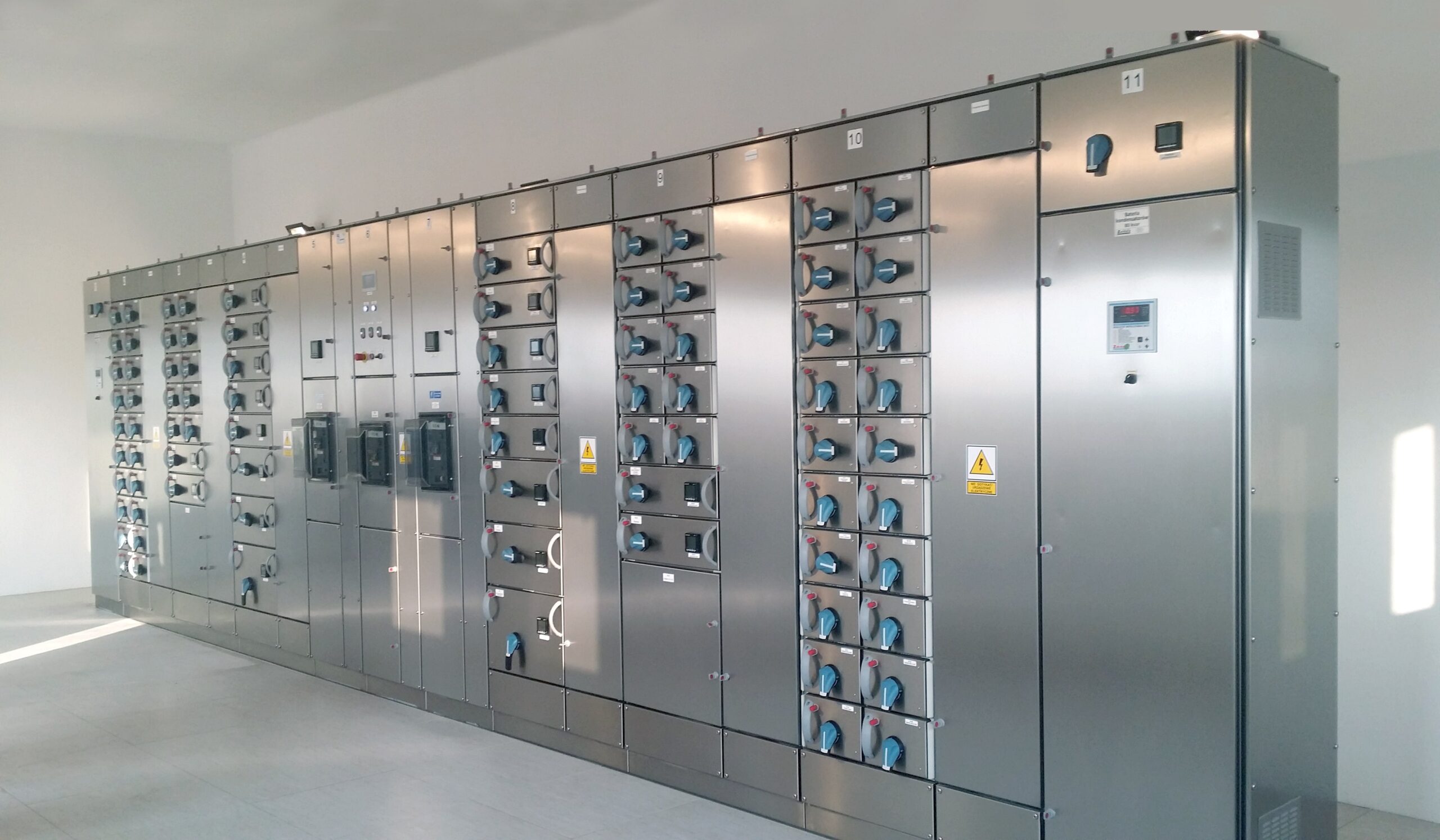
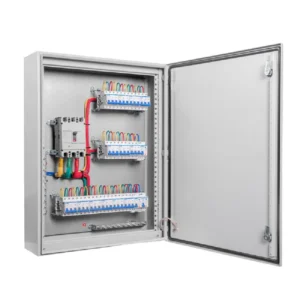
Your DB receives the main electricity supply entering your property and splits it into separate circuits — one for lights, one for plug points, one for the geyser, one for the garage, and so on. Each circuit is protected by a miniature circuit breaker (MCB) or, in older homes, a fuse. If a fault occurs — a short circuit, an overload, or an earth leakage — that protection device is supposed to cut power to that circuit before the wiring can overheat.
A modern DB also contains a residual current device (RCD), sometimes called an earth leakage relay. This device detects when electricity is escaping to earth — for example, through a person who has received a shock — and trips the entire board within 30 milliseconds. This is the device that saves lives.
Why Older Boards Are Genuinely Dangerous
Problem 1: Rewireable Fuses Instead of MCBs
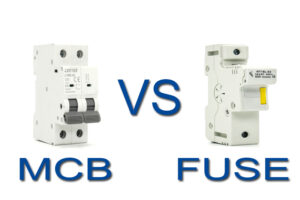
In homes built before the 1990s, you will often find fuses rather than breakers. When a fuse blows, someone has to replace it — and here is where the danger begins. A 15-amp fuse replaced with a 20-amp or 30-amp fuse (because the 15-amp keeps blowing) means the wiring in your walls is now completely unprotected. It can carry dangerously high current, heat up, char the insulation, and eventually ignite the timber framing in your walls, often starting a fire inside the cavity where nobody can see or smell it until it is too late.
Problem 2: No Earth Leakage Protection
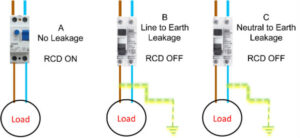
SANS 10142-1 — the South African standard for electrical installations — requires earth leakage protection in all domestic installations. Older homes frequently have none. Without an RCD, an appliance that develops a fault to its casing can deliver a lethal shock the moment someone touches it, and nothing will trip until the fault is severe enough to blow a fuse.
Problem 3: Undersized Boards for Modern Loads
Homes built in the 1970s and 1980s were designed for a fraction of today’s electrical load. Back then a typical home had lights, a stove, a fridge, and a TV. Today the same home might have an inverter, multiple air conditioners, underfloor heating, a fast-charge EV port, a heat pump water heater, two or three large televisions, a full home office, and multiple gaming consoles — all running simultaneously. An old 8-way board simply cannot accommodate all of this safely.
Problem 4: Load Shedding Damage

Every time the power cuts and returns, there is a voltage transient on the supply. Over years of load shedding these spikes degrade the internal components of older boards, weaken surge protection devices (if they even exist), and stress cable insulation. Boards that were marginal before load shedding became routine are now operating in genuinely compromised condition.
Our experience: In a recent inspection in Midrand, we found a 1986-vintage board with a 60-amp main fuse that had been rewired at some point with a piece of stiff copper wire. It had been carrying the full load of a modern four-bedroom home — including an inverter — for at least five years. The fuse wire was discoloured brown from sustained heat.
Six Warning Signs Your DB Needs Attention Right Now
• Breakers that trip repeatedly on the same circuit without an obvious overload.
• A burning smell near the board, even faint or intermittent.
• A DB that feels warm to the touch on the outside.
• Visible discoloration, scorch marks, or melted plastic inside the board.
• Lights that flicker across the entire house rather than on one circuit.
• A board that still uses wire fuses instead of circuit breakers.
What a Professional DB Upgrade Includes
When MDEE Electrical upgrades a distribution board, we do not simply swap the box. We conduct a full inspection of the incoming supply, check cable sizing to every circuit, test earth continuity, verify that the neutral and earth bars are correctly separated, fit a correctly rated main isolator, install dual RCD protection where required, and label every circuit clearly. The job ends with a Certificate of Compliance (CoC) — a legal document that confirms the installation meets SANS 10142-1 and that your insurer will require in the event of a claim.
Call MDEE Electrical today
on +27 76 440 0883 for a free DB inspection.
We serve Gauteng and surrounding areas.