Opening a new shop, restaurant, salon, or office is one of the most expensive and complex projects a business owner will ever undertake. Between lease negotiations, construction timelines, staff hiring, and stock procurement, the electrical fit-out is often left to the last minute or handed to the cheapest quote without much scrutiny. This is a mistake that costs thousands — sometimes tens of thousands — to fix later.
MDEE Electrical has completed commercial electrical fit-outs for retail stores, professional offices, salons, and food service businesses across Gauteng. This guide is written to help business owners understand what they are actually buying when they commission a commercial electrical fit-out, and how to avoid the most expensive mistakes.
The Unique Demands of a Commercial Electrical Installation
A commercial installation is fundamentally different from a residential one in almost every respect. The load demands are higher, the consequences of a fault or outage are more severe (lost trading hours, stock spoilage, reputational damage), the regulatory requirements are stricter, and the installation must be designed with future flexibility in mind — because commercial tenants change layouts, add equipment, and expand more often than homeowners.
Designing for the Right Electrical Load
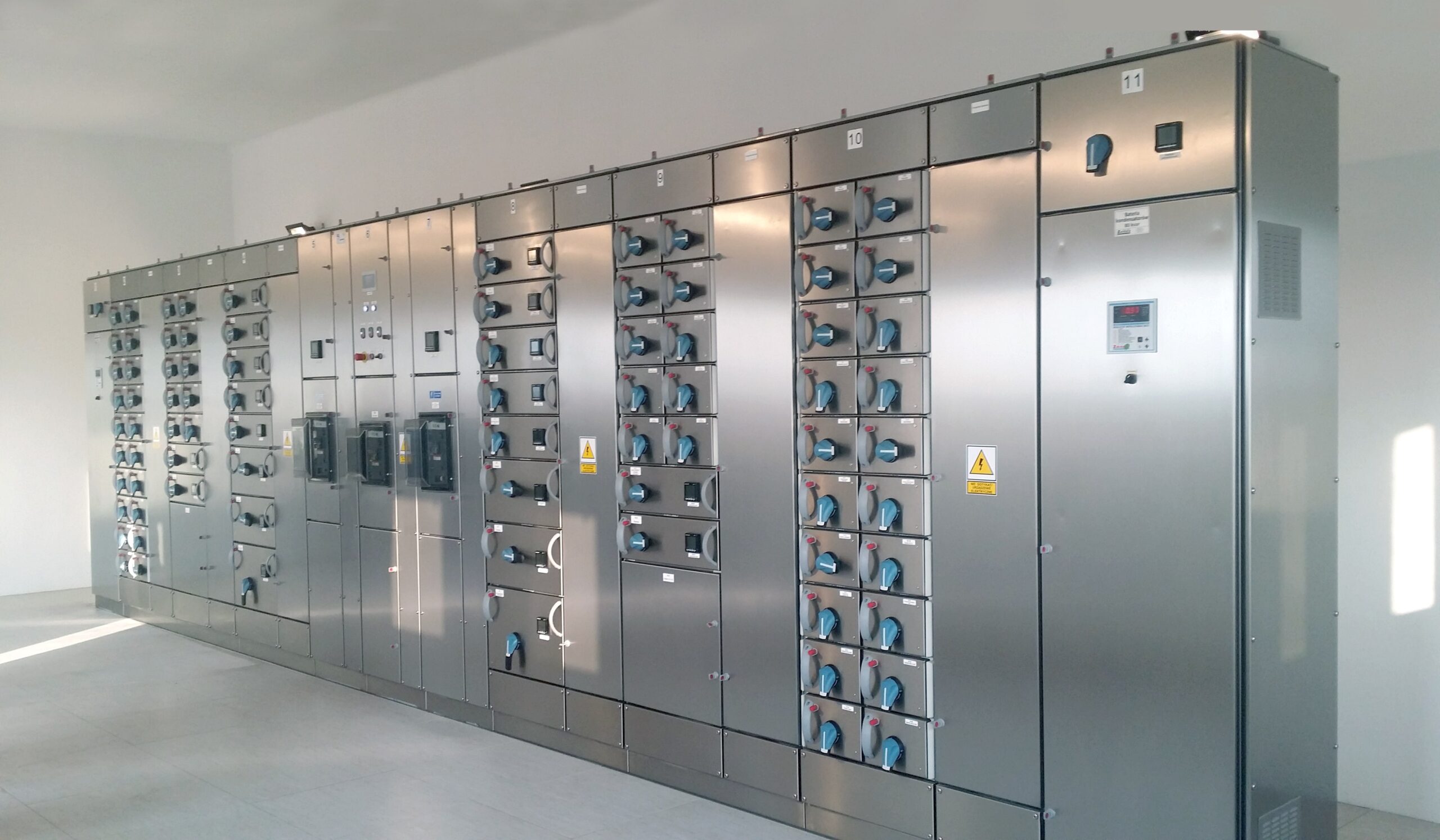
Every commercial electrical fit-out should begin with a load calculation. This is a systematic process of adding up the maximum electrical demand of every piece of equipment that will be used simultaneously — display lighting, air conditioning, refrigeration, kitchen equipment, point-of-sale systems, charging stations, security systems — and sizing the incoming supply, distribution board, wiring, and protection devices accordingly.
Underpowering a commercial installation is one of the most common and costly errors we see. A salon that did not account for the simultaneous operation of twelve salon chairs with dryers, ten UV nail lamps, and four washing stations will spend its first year tripping breakers and calling electricians. Getting the load right at design stage costs nothing extra. Correcting it post-installation can run to R30 000 or more.
Lighting Systems That Work Hard and Look Good
Commercial lighting has two jobs: it must make the space look attractive and it must do so as efficiently as possible. LED technology has transformed commercial lighting economics over the past decade. A properly designed LED lighting scheme for a 200 square metre retail store will typically consume 60 to 70 percent less electricity than equivalent fluorescent or halogen fittings, with lamp lifespans of 25 000 to 50 000 hours meaning far less maintenance.
MDEE Electrical designs and installs commercial lighting systems that balance luminous efficacy (lumens per watt), colour rendering index (how accurately colours appear under the light — critical in clothing retail and food service), colour temperature (warm, neutral, or cool white depending on brand and product), and dimmability where a flexible atmosphere is required.
Data and Power Infrastructure for Modern Offices
Modern office fit-outs require careful coordination between the electrical installation and the structured cabling (data and voice network) installation. Underfloor ducting, cable trays, and conduit routes need to be agreed and installed at the same stage — not after the ceiling has been boarded and the flooring laid. Power outlets, USB charging ports, and data points need to be positioned to serve workstations, meeting rooms, and common areas without unsightly surface-run cables.
Security Systems as Part of the Fit-Out
MDEE Electrical installs security systems as an integrated element of commercial fit-outs, rather than as an afterthought. CCTV cameras, access control systems, alarm panels, and electric fence energisers all require dedicated circuits, correct cable sizing, and proper earthing to function reliably. Having these systems designed into the electrical plan from the start is significantly less expensive than retrofitting them into a completed building.
The Certificate of Compliance Requirement
Commercial properties require a Certificate of Compliance for the electrical installation, just like residential properties. However, the inspection and testing regime is more rigorous, and some commercial premises — particularly food service and health-care facilities — require additional sign-offs from the local authority or municipality. MDEE Electrical handles all compliance documentation as a standard part of every commercial fit-out.
Our advice to every business owner: Budget your electrical fit-out properly. The electrical installation in a commercial space typically represents 8 to 15 percent of total fit-out cost. Trying to cut this below 6 percent almost always results in a substandard installation that will cost more in maintenance, faults, and eventual corrections than the original saving.
Planning a commercial fit-out?
Contact MDEE Electrical at +27 76 440 0883 for a free consultation and detailed scope of work.